By clicking Get My Free Quote, I give Goodco LLC (eGoodwin Insurance) and its licensed agents my prior express written consent, by electronic signature, to contact me with calls and text messages — including marketing calls and texts made using automated technology or an artificial or prerecorded voice — and by email, at the number and email I provided, about my insurance quote and related insurance products and services, even if my number is on a Do Not Call list. My information is never sold or shared with other agencies for their own marketing. Consent is not a condition of purchase; I can call (740) 387-8335 instead. Message frequency varies. Message and data rates may apply. Reply STOP to opt out, HELP for help. I agree to the Privacy Policy and Terms of Use, including the arbitration clause and E-SIGN consent.
You found the house in Powell, and the lender wants proof of homeowners insurance before closing. Or you’ve owned for years, your home’s value has climbed, and the renewal keeps climbing with it. Either way, you want to know whether the policy actually fits the house.
The questions Powell homeowners bring us are a little different from the statewide ones. The fundamentals, like the six parts of an HO-3 policy, replacement cost versus actual cash value and the Ohio FAIR Plan, are covered in our Ohio homeowners insurance guide. This page is about what changes when the house sits in Powell.
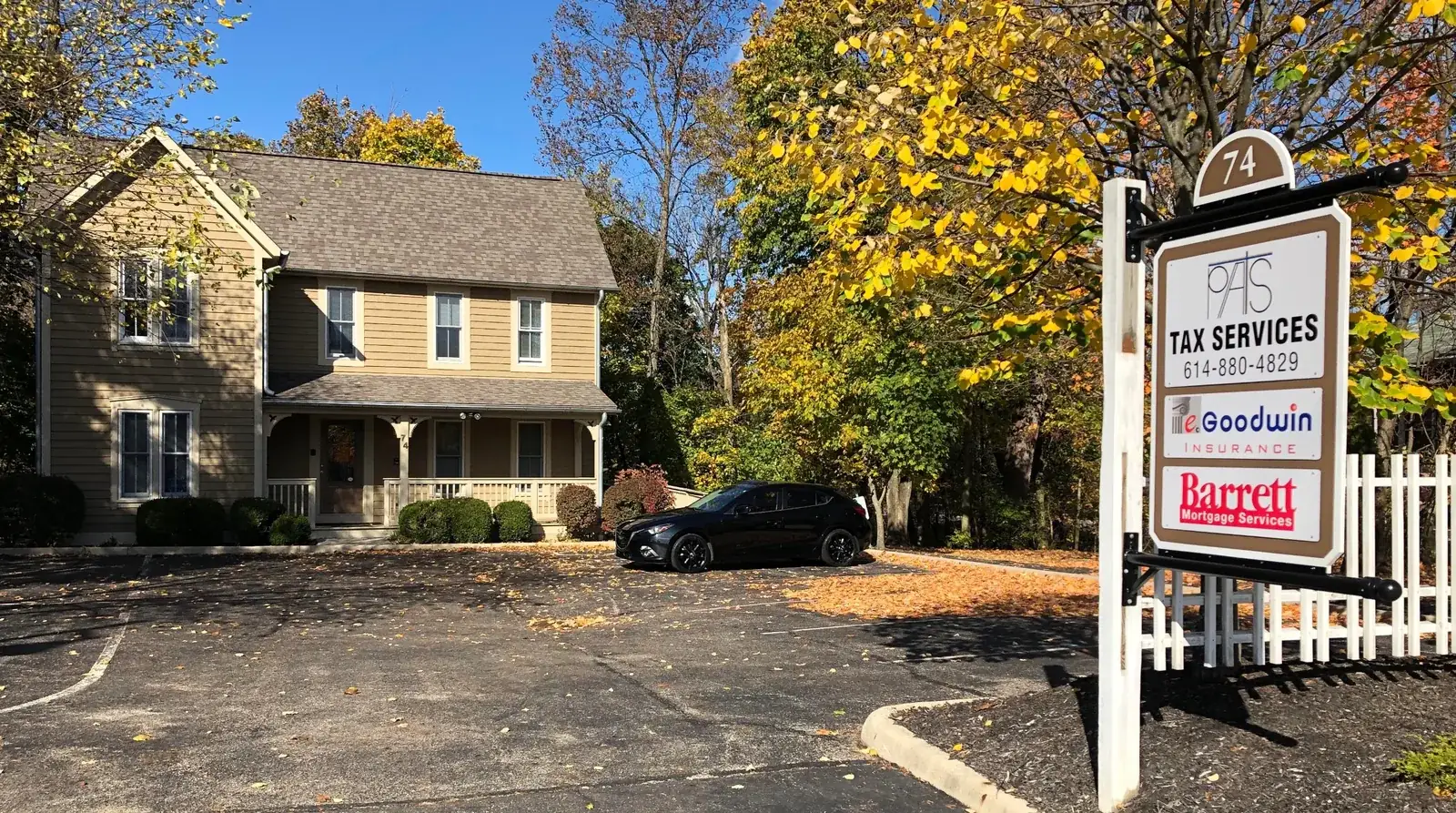
That means higher home values and the rebuild-cost limits that go with them, finished basements and water backup, the flood maps for southern Delaware County, the county’s optional mine subsidence coverage, and liability for households with more to protect. Our Powell office is at 74 E. Olentangy Street, and we’ve been helping Ohio homeowners with these decisions since 1990.
What makes home insurance in Powell different from the Ohio average?
The short answer: Powell homes are mostly owner-occupied and worth more than two and a half times the Ohio median, so dwelling limits, endorsements and liability limits usually need to be set higher than a statewide rule of thumb suggests.
The U.S. Census Bureau’s QuickFacts for Powell, drawn from the 2020–2024 American Community Survey 5-year estimates, puts the city side by side with Delaware County and Ohio:
| Measure | Powell | Delaware County | Ohio |
|---|---|---|---|
| Owner-occupied housing rate | 88.0% | 78.5% | 67.2% |
| Median value of owner-occupied homes | $561,500 | $445,500 | $214,800 |
Two things follow from that. First, nearly nine in ten Powell households own the home they live in, so the homeowners policy is the main protection for the family’s biggest asset. Second, every dollar amount on a Powell declarations page tends to be bigger, and so is the gap when a limit is set too low.
Newer construction helps in some ways. Many companies weigh the age of the home and the roof when they price a policy, and newer wiring, plumbing and roofing tend to raise fewer underwriting questions. But newer and larger also means more square footage, more finishes and often a finished lower level, and all of that raises what the house would cost to rebuild.
Market value isn’t the number your policy should chase, though. A large part of a Powell price tag is the lot, the location and the school district, and none of those need rebuilding after a fire. The next section is about the number that does matter.
How much dwelling coverage does a Powell home need?
The short answer: Enough to rebuild the house at today’s labor and material prices, which may be well above or below its sale price, plus an extended or guaranteed replacement cost cushion and ordinance or law coverage if your company offers them.
The Ohio Department of Insurance’s homeowners insurance guide (September 2019) says most policies require you to insure the house for at least 80 percent of its replacement cost. Fall below that, and the company pays only part of a repair bill, even on a small claim. On a Powell home, the dollars in that shortfall get large fast.
- The policy expects at least $480,000 (80% of $600,000). You carry 87.5% of that.
- On a $40,000 kitchen fire, many policies would pay about 87.5% of the loss, roughly $35,000 before the deductible. The other $5,000 is yours.
Guaranteed and extended replacement cost. ODI’s guide notes that many companies offer guaranteed replacement cost, which pays to rebuild even if costs have risen above your coverage amount. Some companies offer extended replacement cost instead, which adds a set cushion above the dwelling limit, often written as a percentage. Availability, terms and caps vary by company.
That cushion matters most after a widespread storm, when contractors and materials are in short supply and prices jump. It’s also a hedge against a rebuild estimate that was simply a little light. On a large Powell home, a few percent of the dwelling limit is real money.
Ordinance or law. ODI describes it as a provision that pays for upgrades needed to meet building code requirements, and says you might not have it, depending on the policy. If a major loss means rebuilding to current code, this is the line that pays for it. Ask what limit your quote includes.
Roofs inside city limits. Before you sign a roofing contract, ask the City of Powell’s Building Department what permits or inspections a roof replacement needs, keep the paperwork, and tell us when the new roof goes on. Many companies ask about roof age at renewal.
Remodels move the number. A finished basement, a new kitchen, a sunroom or an addition all raise rebuild cost. If you’ve done one since your policy was written, your dwelling limit may be behind. Our Ohio home insurance page explains how we set dwelling limits with clients.
Do Powell homeowners with finished basements need water backup coverage?
The short answer: If your basement is finished, almost certainly, because the Ohio Department of Insurance says water backup isn’t typically covered unless you add it, and the endorsement’s limit should reflect what it would cost to redo the space and replace what’s in it.
ODI’s Severe Weather Toolkit says water backup in the basement isn’t typically covered and must be added, and that sewer and drain backup is excluded or limited in most policies. In plain English: if your sump pump quits during a spring downpour or water comes up through a floor drain, the claim usually turns on whether you bought this endorsement, and how much it pays.
If your lower level is space your family actually uses, that’s where the money is. A family room, a guest bedroom, an office or a home gym means carpet, drywall, trim, built-ins, furniture and electronics. Many water backup endorsements start with a limit far below what that would cost to redo.
Only with the endorsement
Water that backs up through a drain or overflows a failed sump pump is usually covered only if you added water backup, up to its limit.
Usually covered
Sudden, accidental water from plumbing inside the house is usually a covered claim under the main policy.
Needs a flood policy
Water that rises and flows in from outside is flood. Water backup coverage doesn’t fix that.
Usually not covered
Water that seeps through foundation cracks over time is generally treated as maintenance, not a sudden loss.
Size the limit to the room. When we review a Powell policy, we ask what it would cost to tear out and redo the finished space and replace what’s in it, then look for a water backup limit that fits. Higher limits cost more, and companies don’t all offer the same tiers, which is one reason to shop more than one.
Mitigation helps twice. A battery backup for the sump pump, a water alarm near the pit and a plumber’s check of the discharge line can prevent the claim in the first place. Some companies also credit water sensors or automatic shutoff devices, so ask which credits apply to your quote. Our statewide guide explains how flood, backup and seepage differ on a claim.
Is flood insurance worth it in Powell, between the Olentangy and Scioto rivers?
The short answer: It depends on where your house sits on the current FEMA map and how water moves around it, but flood is excluded from homeowners policies, so it’s worth pricing even outside a mapped high-risk area.
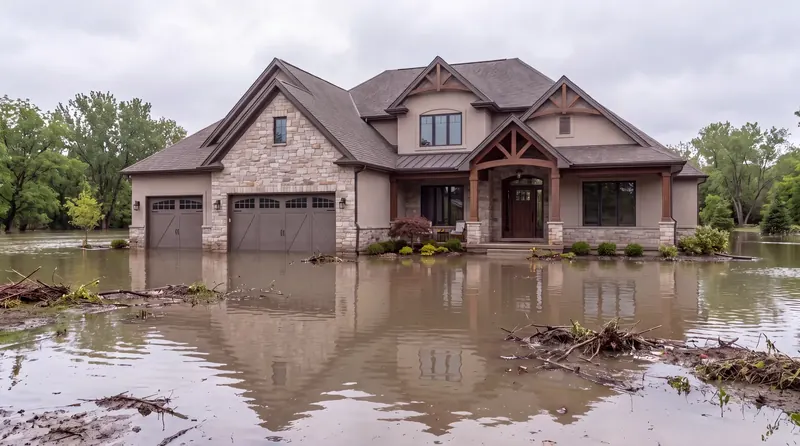
Powell sits between the Scioto River to the west and the Olentangy River to the east. Most homes in town aren’t on either riverbank, but a house near a creek or on low ground can still take on water in a heavy storm, and your homeowners policy won’t pay for it.
The maps changed recently. FEMA issued new Flood Insurance Rate Maps for Delaware County and its incorporated areas, including the City of Powell, effective December 21, 2023, according to its final flood hazard determination in the Federal Register (July 27, 2023). If you last looked at your flood zone before then, look again on FEMA’s Flood Map Service Center.
If your home is in a mapped high-risk area and you have a federally backed mortgage, your lender will require flood insurance. Outside those areas it’s optional. FEMA’s NFIP decision flyer (October 2024) says about one-third of NFIP claims from 2013 to 2023 came from outside current high-risk flood areas.
NFIP policies cover up to $250,000 on the building and $100,000 on contents, and a new policy typically has a 30-day waiting period. That makes flood a decision for a dry month, not the week the forecast turns. On a Powell home that would cost more than $250,000 to rebuild, ask us whether coverage above the NFIP limits makes sense.
Our flood insurance page covers NFIP options for central Ohio homeowners.
By clicking Get My Free Quote, I give Goodco LLC (eGoodwin Insurance) and its licensed agents my prior express written consent, by electronic signature, to contact me with calls and text messages — including marketing calls and texts made using automated technology or an artificial or prerecorded voice — and by email, at the number and email I provided, about my insurance quote and related insurance products and services, even if my number is on a Do Not Call list. My information is never sold or shared with other agencies for their own marketing. Consent is not a condition of purchase; I can call (740) 387-8335 instead. Message frequency varies. Message and data rates may apply. Reply STOP to opt out, HELP for help. I agree to the Privacy Policy and Terms of Use, including the arbitration clause and E-SIGN consent.
Should Powell homeowners add mine subsidence coverage?
The short answer: It’s your choice, because Delaware County is one of 11 Ohio counties where insurers must offer mine subsidence coverage as an option, and the state caps its yearly premium at $20 there, so it’s a small decision either way.
Ohio Administrative Code rule 3901-1-48 (effective February 14, 2022) splits the state into two groups. In 26 counties, mostly in eastern and southeastern Ohio, homeowners policies must include mine subsidence coverage. In 11 more, including Delaware County, insurers must offer it on an optional basis. Franklin and Union counties aren’t on either list.
In plain English: because the City of Powell is in Delaware County, your company has to offer the coverage, and you decide whether to take it. Under the rule, it pays up to your dwelling limit or $300,000, whichever is less, with a deductible between $250 and $500, and the annual premium in the optional counties can’t exceed $20.
Is there much mining under Powell? We’re not geologists, and we won’t guess. What we can tell you is that the price is capped by rule, standard homeowners policies typically exclude earth movement, and the choice should be made on purpose rather than by default. If your Powell mailing address sits outside Delaware County, the rule for the county where the house actually sits is the one that applies.
How should a higher-asset Powell household handle valuables and liability?
The short answer: Schedule the valuables your policy caps, such as jewelry, and raise your liability limit to fit what you own, adding an umbrella policy when your home equity, savings and income would be worth suing for.
ODI’s homeowners guide notes that policies have separate limits on things like jewelry, computers and fur coats, and that you may increase your coverage by adding a scheduled limit. In plain English: an engagement ring, a watch collection or a piece of art may be covered for far less than it’s worth under the standard personal property limit.
A few steps keep that from becoming a surprise:
- Gather appraisals or receipts for jewelry, watches, art, collectibles and anything else worth more than a few thousand dollars.
- Ask what your policy’s special limits are for each category, and schedule the items that exceed them.
- Update appraisals every few years, since values change.
- Fill out ODI’s free home inventory checklist and keep a copy somewhere other than the house.
Liability is the other half. ODI says personal liability coverage has a dollar limit, and that many companies offer umbrella coverage to increase your liability protection. Census puts Powell’s median household income at $195,495 (2020–2024 ACS), and income, savings and home equity are exactly what a serious liability claim goes after.
A pool, a trampoline, a dog, a teen driver or a rental property raises the stakes further. An umbrella sits above your home and auto liability limits and pays after they’re used up. Companies usually require certain underlying limits first, so we look at all three together. Our umbrella insurance page explains how it fits.
How does our Powell office quote home insurance?
The short answer: We start from your current declarations page, set the dwelling limit to rebuild cost, match deductibles and endorsements, and then quote the same coverage across our lineup of companies so the prices actually compare.
We’re an independent agency, so we work for you, not an insurance company. From our Powell office at 74 E. Olentangy Street, we help homeowners in Powell and nearby Dublin, Lewis Center, Westerville and Delaware. Our Marion office serves the north, and (740) 387-8335 reaches either one. Here’s the order we work in:
- Start with your declarations page
It shows your dwelling limit, other coverages, deductibles, endorsements and premium. That’s the baseline, so every change from it is on purpose.
- Set the dwelling limit to rebuild cost
We use a current replacement cost estimate, not the sale price or the county’s tax value, and quote every company at that same number.
- Put every deductible in dollars
That includes any separate wind/hail deductible. On a higher-value home, 2% of a $550,000 dwelling limit is $11,000 out of pocket on a hail claim.
- Price the Powell endorsements
Water backup sized to your basement, extended or guaranteed replacement cost, ordinance or law, scheduled valuables and your mine subsidence choice.
- Look at flood separately
Check your address against the December 2023 maps and price an NFIP policy if water could reach the house.
- Line up liability, umbrella and auto
We size liability to what you own and show you a bundle if you’d like one. Our Ohio car insurance guide covers the auto side.
Powell gets the same weather as the rest of central Ohio: spring and summer storms with wind and hail, then ice and deep cold. How wind/hail deductibles, roof settlement, frozen pipes and fallen trees play out on a claim is covered in the storms section of our statewide guide, so we won’t repeat it here.
The bottom line
Home insurance in Powell comes down to a handful of decisions: a dwelling limit set at rebuild cost, with a cushion above it, water backup sized to a finished basement, a fresh look at the December 2023 flood maps, an on-purpose choice about mine subsidence, and valuables, liability and umbrella coverage that fit what you own.
If you’d like a second set of eyes, send your ZIP below or call (740) 387-8335. We’ll read your declarations page with you, flag the gaps and quote the same coverage across the companies we represent.
Some clients have saved up to 36% when we re-shopped their coverage. Savings vary by household and aren’t guaranteed. You can also start a home quote online or stop by our Powell office, Monday through Friday from 9 to 5.
By clicking Get My Free Quote, I give Goodco LLC (eGoodwin Insurance) and its licensed agents my prior express written consent, by electronic signature, to contact me with calls and text messages — including marketing calls and texts made using automated technology or an artificial or prerecorded voice — and by email, at the number and email I provided, about my insurance quote and related insurance products and services, even if my number is on a Do Not Call list. My information is never sold or shared with other agencies for their own marketing. Consent is not a condition of purchase; I can call (740) 387-8335 instead. Message frequency varies. Message and data rates may apply. Reply STOP to opt out, HELP for help. I agree to the Privacy Policy and Terms of Use, including the arbitration clause and E-SIGN consent.
Powell home insurance FAQ
How much does home insurance cost in Powell, Ohio?
There isn’t one honest number, because the price follows the house. The biggest driver in Powell is the dwelling limit, and Powell homes carry high ones: the U.S. Census Bureau puts the median owner-occupied value at $561,500 for 2020–2024, against $214,800 statewide. Your rebuild cost, roof age, deductibles, water backup limit, claims history and the company all move the premium. We don’t quote averages. We quote your house, at the same limits across the companies we represent, so you can see real prices side by side.
Is Powell, Ohio in a flood zone?
Most Powell homes aren’t in a mapped high-risk flood area, but some near streams and low ground are, and the only way to know is to check your address. FEMA’s current Flood Insurance Rate Maps for Delaware County, including the City of Powell, took effect December 21, 2023. You can search them on FEMA’s Flood Map Service Center. If you’re in a high-risk area with a federally backed mortgage, your lender will require flood insurance. Outside those areas it’s optional, and your homeowners policy still excludes flood.
Does homeowners insurance cover a sump pump failure in a finished Powell basement?
Usually only if you added a water backup endorsement. The Ohio Department of Insurance says water backup in the basement isn’t typically covered and must be added, and that sewer and drain backup is excluded or limited in most policies. With a finished lower level, the endorsement’s limit matters as much as having it, because flooring, drywall, furniture and electronics add up quickly. Ask what it would cost to redo the space, then choose a limit that fits. Surface water from outside is flood, which needs a separate policy.
Do I need mine subsidence coverage in Delaware County?
It isn’t required. Under Ohio Administrative Code rule 3901-1-48, Delaware County is one of 11 counties where insurers must offer mine subsidence coverage on an optional basis, so the choice is yours. Where it’s optional, the annual premium can’t exceed $20. The coverage pays up to your dwelling limit or $300,000, whichever is less, with a deductible between $250 and $500. Because standard homeowners policies typically exclude earth movement, many people treat it as an inexpensive decision worth making on purpose rather than by default.
Should my Powell dwelling limit match what I paid for the house?
No. Your dwelling limit should match what it would cost to rebuild the house today, not the purchase price. A Powell sale price includes the lot, the location and the school district, and none of those need rebuilding after a fire. Rebuild cost can land above or below the price you paid. The Ohio Department of Insurance says most policies require you to insure at least 80 percent of replacement cost, and falling short can reduce even a partial claim. Extended or guaranteed replacement cost adds a cushion where a company offers it.
Does eGoodwin Insurance have an office in Powell?
Yes. Our Powell office is at 74 E. Olentangy Street, Powell, OH 43065, and our Marion office is at 399 E. Church Street in Marion. Both are open Monday through Friday from 9:00 AM to 5:00 PM Eastern, and (740) 387-8335 reaches either one. From Powell we help homeowners in town and in nearby Dublin, Lewis Center, Westerville and Delaware. We’re an independent agency, so we can quote your home across the companies we represent and review it with you each year as your needs change.
Last reviewed by Mark Goodwin on .